Honda invests in U.S. startup Mythic to co-develop a neuromorphic SoC inspired by the human brain. By combining analog compute-in-memory technology with Honda's AI expertise, this brain-like chip achieves both massive power savings and high AI performance—potentially transforming autonomous driving for next-generation software-defined vehicles.
Furuno Electric, headquartered in Nishinomiya, Japan, has grown from a small radio repair shop in postwar Nagasaki into the world's dominant marine electronics maker, holding 49% of the fishing vessel electronics market and 43% of commercial ship radar. From inventing the world's first practical fish finder in 1948 to today's AR navigation and autonomous vessel technology, discover how Furuno's "seeing the invisible" philosophy is shaping the future of seafaring. In 2024, their fish finder was recognized as an IEEE Milestone.
Wood-fire cooking is taking the global gastronomy world by storm, sparked by Spain's legendary Asador Etxebarri. Unlike charcoal, firewood imparts unique aromas and flavors from local trees, creating one-of-a-kind dishes. In Japan, rural restaurants in renovated farmhouses are embracing this ancient technique, attracting wealthy food lovers from around the world through "local gastronomy."
On February 9, 2026, Japan's Nikkei 225 hit an all-time high of 56,363 after the LDP's landslide election victory. But 291 stocks actually fell. From KDDI's subsidiary fraud scandal to Fujikura's ignored record earnings and the struggling auto sector, here's a deep dive into the stocks that missed the historic rally.
Fujikura dominates the global market for high-temperature superconducting wire essential to fusion reactors. Combined with Japan's domestic AI-powered autonomous driving, artificial photosynthesis breakthroughs, and the government's Physical AI strategy, these technologies are putting Japan back on the global innovation map.
A Kyoto-based tech company TASKMATE has developed a blade-resistant tote bag that doubles as a protective shield in emergencies. Featuring their proprietary cut-resistant fiber CYGUS® and artisan sewing from Kagawa Prefecture, this Made-in-Japan security product showcases how Japanese craftsmanship is entering the personal safety market.
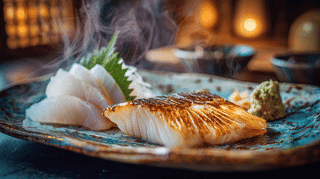
Kindai University has achieved the world's first full-cycle aquaculture of Nodoguro (Blackthroat seaperch), a high-end deep-sea fish known as the "White Toro." Learn about the decade-long journey, the technical challenges overcome, and what Japan's aquaculture leadership means for global food security.
JR East launches Japan's first cargo-only Shinkansen in March 2026. A former Yamagata Shinkansen E3 Series train has been stripped of all 394 seats and rebuilt to carry up to 17.4 tons of freight at 186 mph. Learn how the "Hako-Byun" service tackles Japan's driver shortage, cuts CO2 emissions, and creates a high-speed logistics link between rural producers and Tokyo.
Shibaura Institute of Technology's "InSIGHT Grip" is a non-destructive inspection technology that estimates internal quality simply by gripping objects with a robot hand. With a low-cost, sensor-free design, it promises applications from fruit sorting in agriculture to industrial deterioration detection.
Tufts University researchers have developed a new, lower-cost way to produce tagatose, a rare sugar 92% as sweet as table sugar with 60% fewer calories. It has little effect on blood sugar, holds FDA GRAS status and browns like sugar in baking. Here is what it could mean, and what still stands in the way.
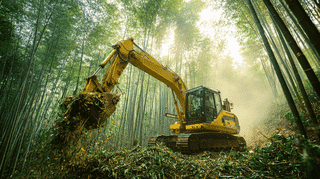
Japan's bamboo forests cover roughly 400,000 acres, and unmanaged groves keep spreading, raising landslide risks and damaging ecosystems. Taguchi Industrial from Okayama has answered with the "TakeKaruGon" - a domestically-made mulcher attachment for hydraulic excavators that shreds bamboo, large trees, and stumps in one machine. Discover how this innovation tackles one of Japan's most overlooked environmental crises.