Osaka-based Satosen's liquid metal stretchable circuit board has been officially adopted by ATR-Promotions for biosignal measurement electrodes. With self-healing wiring that withstands over 250,000 stretch cycles, this technology opens doors for wearable devices, flexible displays, and soft robotics.
Japan's Kioxia is set for consecutive record-breaking years, with revenue exceeding $14 billion for the first time. NAND production capacity for 2026 is already "sold out" as AI data center demand far outpaces supply. From a rocky IPO to the world's best-performing stock of 2025 with a 540% gain, we explore Kioxia's remarkable turnaround and what it means for Japan's semiconductor renaissance.
Pritzker laureate Riken Yamamoto calls Tokyo's Hills-style mega-developments, Azabudai Hills chief among them, a "colony for the rich." A look at the towers, the neighborhoods they replace, and how other cities have handled the same pressure.
Japan's anime market has reached a record $25 billion globally. While aggressive M&A deals by Sony, KADOKAWA, and others have fueled explosive overseas growth, questions remain about low animator wages, creative risk-taking, and whether the industry's real creators are seeing any of the profits. A deep dive into the boom's winners and losers.
At its first global showcase, Amazon Prime Video announced worldwide exclusives on three Japanese anime titles: a 40th-anniversary Fist of the North Star reboot, a new Ghost in the Shell TV series, and a fantasy sequel. What the deals say about Japanese IP in the streaming era.
At the 2026 Milano Cortina Winter Olympics, all six moguls medalists used ID one skis made by Material Sports, a five-employee company in Osaka, Japan. It was the second straight Olympics in which Japanese-made skis took every moguls medal, and ID one swept the new dual moguls podium as well.
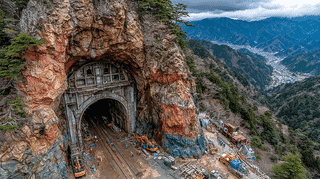
JR Central has pushed completion of three Tsukui and Fujino tunnel sections on the Chuo Shinkansen maglev line to 2031, after the rock proved more fragile than expected. A look at what the world's first superconducting maglev is up against, with costs now at ¥11 trillion.
Up to 90% of farmed oysters have died in parts of Hiroshima Prefecture, Japan's largest oyster-producing region responsible for 60% of national output. Rising water temperatures, high salinity, and oxygen depletion in the Seto Inland Sea have caused unprecedented damage to a 450-year-old aquaculture tradition. We report on the causes, impact, and what comes next.
Dentsu Group posted a record net loss of 327.6 billion yen ($2.1 billion) for FY2025 after massive goodwill write-downs on failed overseas acquisitions. CEO steps down, dividends cut to zero. What went wrong with Japan's biggest ad agency's global ambitions?
As cocoa prices hit record highs, Japan embraces innovative alternatives — from sunflower seed "chocolate" to soy meat. Discover how rising food costs are reshaping Japanese food culture, driving innovation, and changing consumer habits just in time for Valentine's Day.
Japanese space startup SpaceOne launched its third KAIROS small rocket on March 5, 2026 after repeated delays, but flight was aborted about 68.8 seconds after liftoff, a third straight failure following Flights 1 and 2. Learn what the company changed, what went wrong this time, and where its "space delivery service" dream stands now.