Takara Tomy's Licca-chan is back in the US after 40-plus years. We unpack why it lost to Barbie as LISA in 1980, why the rival is now Labubu's kidult collectible market, and whether the anime-led comeback can work.
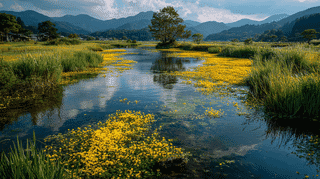
A paddy field in central Japan was swallowed by bright yellow flowers. Water primrose, a South American invader, regrows from the tiniest stem fragment. We look at why farmers cannot kill it, how the same plant is wrecking waterways in France, Britain and the US, and why eradication may be impossible.
At a major Japanese pet expo, a homegrown technology called Livnight grows a sparkling gem from a dog's ashes. It costs far less than an ash-diamond, actually out-sparkles one, and never leaves Japan. A clear look at why Livnight, plus the country's pet farewell culture.
GAIA RESORT ACURA, a new rental villa in Zao, Miyagi, preserves the workshop and stained-glass art of the late Honda engineer Akira Ishizuya, who worked on the CVCC engine. A stay built around Japan's craftsmanship for car and motorsport fans.
A new private tour called NINJA ORIGINS lets travelers train as real ninja in Iga and Koka, the birthplace of ninjutsu. From 200,000 yen (about $1,260) per night, guests sleep in restored historic buildings and join shrine rituals and a museum infiltration mission, as part of a model that funnels tourism revenue back into heritage conservation.
Hokuriku Electric has broken ground on a 2,000 kW hydropower plant in Komatsu, Ishikawa — Japan's first dedicated to a bullet train. All output will flow to JR West under an offsite PPA. How does Japan's decarbonization push compare with SNCF and Deutsche Bahn?
Japan's Environment Ministry confirmed PFAS contamination above national limits at 629 sites across 26 prefectures in fiscal 2024 — including locations near U.S. military bases, factories, and Self-Defense Force facilities. A UN special rapporteur has voiced 'most serious concern,' while Japan's standards lag far behind those of the U.S. and EU.
Researchers at Kyoto University used Japan's near-total medical insurance database to trace esotropia (inward-turning eyes) cases from 2014 to 2019, the years smartphones swept the country. Incidence rose from 32.26 to 36.61 per 100,000 person-years; surgeries climbed from 3,061 to 3,743. The link with smartphone penetration is strong, the absolute rise is small.
Kissei Pharmaceutical reports 20 deaths among Japanese patients treated with Tavneos (avacopan), a vasculitis drug. Twenty-two cases of vanishing bile duct syndrome were identified, with 13 deaths. The FDA has proposed withdrawal; Europe's EMA is reviewing. Here is what is happening in Japan, the US, and Europe—and what it means for ANCA vasculitis patients.
On May 20, 2026, Japan added three ultra-expensive regenerative medicines to public insurance coverage: Amshepri (world's first iPS cell-derived drug, for Parkinson's), Akugo (stem cells for traumatic brain injury), and Zolgensma Intrathecal (gene therapy for SMA patients aged 2+). Prices range from 55 million yen ($352K) to 167 million yen ($1.06M). We explain why these drugs cost so much, how Japan's high-cost medical expense system shields patients, and whether prices might fall over time.
Calbee is switching 14 of its flagship snacks — including Potato Chips Lightly Salted, Consomme Punch, and Kappa Ebisen shrimp chips — to monochrome 'petroleum-saving packages' from May 25. The cause: ink shortages triggered by the Hormuz Strait crisis. A symbolic case of geopolitical risk reaching Japan's shelves, compared with parallel moves at Lindt, Lamb Weston and Smithfield Foods.