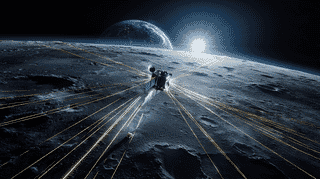
Japanese space startup ALE announces "Starlight Challenge," its third attempt to create the world's first artificial shooting stars after two previous setbacks. Targeting a 2028 space demonstration and commercialization by 2029, this ambitious project blends space entertainment with atmospheric science research.
Kyushu University and Japan Medical Company are developing the "Hakata Model," a next-generation 3D surgical training platform that reproduces individual patient tumors with high precision, transforming one-time surgical experiences into repeatable hands-on training for neurosurgeons.
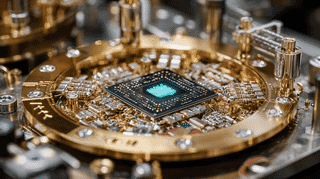
Japanese semiconductor equipment makers are expanding their global presence amid the AI chip boom. Tokyo Electron dominates coater/developers with 90%+ share, SCREEN leads wafer cleaning, and Advantest tops semiconductor testing. We analyze how Japanese firms leverage precision manufacturing to thrive in a market projected to reach $156 billion by 2027—and the challenges they face from US and European rivals.
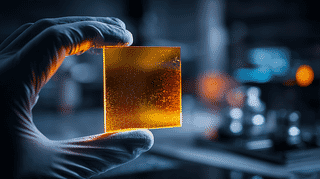
Kyoto-based precision instrument maker HORIBA has acquired Indian startup Pristine Deeptech to accelerate diamond wafer commercialization. Diamond is called the "ultimate semiconductor material" with properties far surpassing silicon. Learn about HORIBA's strategy to build an R&D hub in India for next-generation power semiconductors and quantum sensors.
Nagano-based IT company TOSYS has launched Japan's first commercial container data center featuring both water-cooling and liquid immersion cooling. Deployable in as little as 3 months, powered by renewable energy, and with plans for perovskite solar panels, this regional initiative is redefining Japan's data center strategy for the AI era.
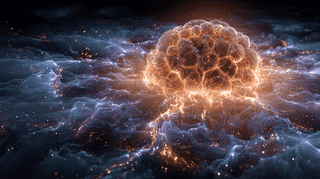
A groundbreaking survey of 312 neuroscientists reveals that 41% believe long-term memories could be decoded from preserved brains after death. Could Whole Brain Emulation (WBE) achieve digital immortality by 2125? From engrams and connectomes to the hard problem of consciousness, we explore the science behind uploading your mind.
The US CCA program, China's loyal wingmen, and Japan's GCAP-linked combat drones. As nations race to develop AI-powered unmanned combat aircraft, we examine where Mitsubishi Heavy Industries and Kawasaki Heavy Industries stand, and the structural challenges Japan's defense industry must overcome.
Japan's autonomous container ship "Genbu" has begun the world's first commercial operation with both bridge and engine room automation. Built from scratch over three years under the MEGURI2040 project, this AI-powered vessel features automatic route planning, collision avoidance, and self-docking, addressing Japan's critical crew shortage and logistics crisis.
A comprehensive look at SiC and GaN power semiconductor innovations reshaping the industry. From 8-inch wafer migration and vertical GaN breakthroughs to surging AI data center demand, explore Japan's role in the next-gen power revolution.
A Japanese-led research team has detected the largest sulfur-bearing organic molecule ever found in interstellar space, a 13-atom ring compound near the Milky Way's center. The discovery bridges simple space chemistry and complex building blocks of life found in comets and meteorites, offering a key missing link in understanding life's cosmic origins.
Japan's hotel industry faces one of the worst labor shortages in the developed world, with over 60% of hotels reporting staff shortages. From AI chatbots and facial recognition check-in to cleaning robots and dynamic pricing, Japanese hotels are turning to technology as a lifeline. Explore real-world cases including the famous Henn na Hotel, which runs 144 rooms with just 7 staff, and the latest generative AI initiatives backed by Japan's tourism agency.