Japan unveils groundbreaking automated rare metal recovery system developed over 30 years by AIST's Dr. Tatsuya Oki. Combining AI detection with air-based sorting technology, this world-first facility in Osaka began testing in September 2025. The system automatically extracts up to 10 types of rare metals from six categories of small electronics including smartphones and tablets, targeting commercial operation by 2028. Learn how this innovation could transform Japan's resource security and reduce dependence on Chinese imports.
Japanese-led international research team reveals the quenching mechanism of thorium-229 isomers crucial for next-generation nuclear clocks. Discovery shows electrons in crystals reset nuclear states, advancing portable solid-state nuclear clocks for GPS and dark matter research.
NIMS and University of Tokyo researchers have developed a revolutionary wafer-scale deposition technology for next-generation semiconductor material MoS2 (molybdenum disulfide). By discovering two key growth mechanisms—self-alignment and self-limiting—they achieved uniform, high-quality monolayer films across entire 2-inch wafers. This breakthrough opens the path to post-silicon semiconductors for sub-1nm node transistors.
Toray's all-carbon CO2 separation membrane successfully demonstrated at an Osaka sewage treatment plant. The technology reduces dehumidification costs by approximately 70% compared to conventional methods, dramatically improving biogas power generation economics and potentially transforming sewage plants nationwide into small-scale power stations.
Researchers at the University of Tsukuba have developed an AI system that automatically detects whip sounds in horse racing. Using 192kHz high-fidelity audio and deep learning, the technology achieves 70% accuracy with potential for real-time detection—advancing race fairness and animal welfare.
Japan leads smart contact lens development with groundbreaking innovations: holographic display technology from Tokyo University of Agriculture and Technology, SEED's open-source platform, and Waseda's electromagnetic shielding. Market projected to reach $10B by 2030. Discover how Japanese universities and companies are shaping the future of wearable tech.
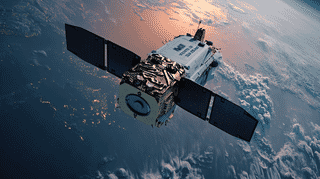
Australian researchers have developed "thermoradiative diodes" that convert infrared radiation emitted from Earth into space at night into electricity. This reverse solar panel technology shows promise for satellite power and deep space missions. Explore the potential and challenges of this renewable energy breakthrough.
Japan's H3 rocket No. 8 failed on December 22, 2025. JAXA investigation reveals fairing separation anomaly caused the failure. Analysis of impact on Japan's space program.
SETI researchers propose revolutionary communication protocols using AI and large language models for extraterrestrial contact. Learn how humanity's first interstellar conversation could happen through AI ambassadors carrying our knowledge across the cosmos.
SFTS, a tick-borne disease with 10-30% fatality rate. With treatment approved in 2024, early diagnosis is key. Japanese institutions including Osaka University are developing rapid diagnostic kits similar to flu tests. Record-high cases in 2025 with first Hokkaido infection raises nationwide concern.
Researchers at Juntendo and Hiroshima Universities have found that soluble ST2 (sST2), naturally maintained at high levels in the body, suppresses food allergies by blocking IL-33 signaling. The study identifies fibroblasts as the key sST2-producing cells and points toward new allergy prevention and treatment strategies.