Researcher Yohei Kawai and Professor Shin Kaneko at Kyoto University's CiRA have established a way to induce helper T cells, the conductors of the immune system, from human iPS cells without mouse feeder cells. The paper ran in Molecular Therapy on January 20, 2026. Why this matters against the three structural limits of CAR-T therapy, and where Japan stands against Fate Therapeutics in the US and China's sheer trial volume.
Chinese G.657.A2 optical fiber went from 32 yuan to 240 yuan per fiber-kilometer in a year, a 650% jump. The visible driver is AI data centers; the hidden one is disposable fiber-optic drones on the Ukraine front. China holds 60% of preform capacity, Japan leads on 13,824-core cables, and the US holds the hyperscaler demand.
Yamaguchi's premium sake brand Dassai and Japanese engineering giant Mitsubishi Heavy Industries brewed sake in space for the first time in human history. The result was a single 100ml bottle, priced at about $700,000, and it sold. Inside the Dassai MOON Project, the long-term plan to build a brewery on the Moon, plus practical brewery-tour information for visitors to Iwakuni, Yamaguchi.
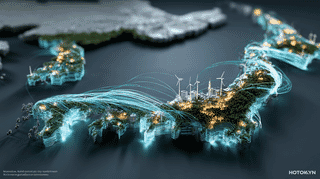
By fiscal 2034, new data centers and semiconductor fabs will add peak electricity demand equal to seven nuclear reactors in Japan, with roughly 60 percent of capacity clustered around Tokyo and the connection queue backed up. The government's answer is Watt-Bit Integration. Set against Virginia's pricing fix, Ireland's renewables mandate, and Singapore's hard area cap, Japan's regional-distribution-plus-decarbonization bet comes into focus.
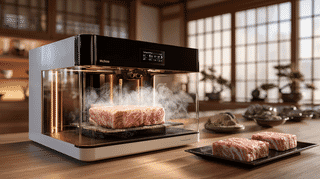
TOPPAN, a 120-year-old Japanese printing company, is applying the thin-film layering know-how it built in semiconductors to 3D-printed cultured meat, targeting revenue from 2031. The plan: a countertop 'Meat Maker' that prints marbled wagyu from data and a recipe. We cover the NEDO consortium with Shimadzu and Itoham Yonekyu, Integriculture's rival cellular agriculture platform, where cultivated meat is legal today, and the cost wall still in the way.
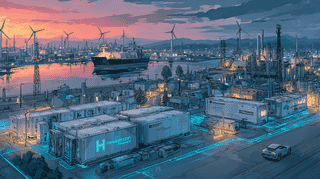
An in-depth look at Japan's Hydrogen Arterial Plan (Suiso Daidomyaku Koso), unveiled by METI in April 2026. Six priority regions connected by arterial highways will receive concentrated investment of 15 trillion yen by 2040, with Toyota and Chiyoda starting mass production of electrolyzers in 2029. How Japan's strategy compares with the US IRA and the EU Hydrogen Bank.
JAL launches Japan's first humanoid robot trial at Haneda Airport in May 2026. Chinese-made Unitree G1 and UBTECH Walker E will handle cargo loading and cabin cleaning, Japan's bipedal answer to its aging workforce and aviation labor crisis.
Submarine cables carry 99% of international data traffic, and roughly 90% of new construction is controlled by just three companies: SubCom (US), Alcatel Submarine Networks (France), and NEC (Japan). Japan now wants 35% of that market by 2030, and NEC's CEO is targeting 40%. We unpack the AI-era infrastructure race, the Taiwan Strait cable cuts, the exclusion of China's HMN, and why undersea cables have become the new front line of geopolitics.
A Tohoku University-UC Irvine team led by Prof. Kei Igarashi has discovered that dopamine in the entorhinal cortex drops to less than one-fifth of normal levels in Alzheimer's mice, driving memory loss. Published in Nature Neuroscience, the finding suggests Levodopa—a Parkinson's drug used for over half a century—could restore memory in Alzheimer's, opening a new path beyond the amyloid-beta hypothesis behind drugs like lecanemab.
Japan's Digital Agency open-sourced 'Gennai', its in-house government generative AI environment, under commercial-use licenses. With a 180,000-employee rollout planned for FY2026, we compare Japan's build-then-open approach with the US GSA's USAi platform, the UK's Humphrey suite, and the EU AI Act framework.
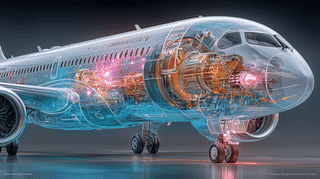
Toshiba Energy Systems, Airbus, and Toyota are racing to commercialize superconducting motors that promise 10x the power density of conventional motors. Dubbed the 'ultimate motor,' the technology enables hydrogen aircraft and hydrogen-engine cars while leveraging Japan's decades of niche superconductor expertise. As eVTOL startups falter, why is Japan's aviation motor technology suddenly central to the global decarbonization race?