JAXA confirms H3 No.8 failure was caused by satellite adapter delamination. On June 12, the minimum 'Type 30' configuration without boosters launched successfully for the first time. Japan's environmental satellites vs China's Daqi-2.
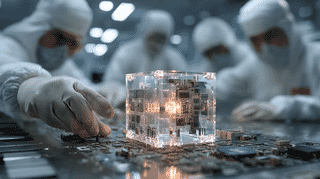
Resonac, the world's top supplier of back-end semiconductor materials, has fully launched US-JOINT, a 12-company Japan-US consortium R&D center in Union City, California. The goal: cut proof-of-concept cycles from six months to one, and plug directly into the custom AI chip development of GAFAM-class hyperscalers.
NEC has begun a strategic partnership with Anthropic, becoming the first Japanese company named as a global partner. The deal embeds Claude Opus 4.7 and Claude Cowork into NEC's BluStellar DX platform for banks, manufacturers, and local governments, and deploys Claude across roughly 30,000 employees. We break down NEC's three-layered AI strategy spanning its own cotomi LLM, the national Physical AI initiative, and now Anthropic, and examine why Tokyo's IT giants are hedging toward Claude over ChatGPT.
Susumu Kitagawa of Kyoto University, joint winner of the 2025 Nobel Prize in Chemistry, has long advocated turning air itself into a resource through metal-organic frameworks (MOFs). His porous crystals can sort and capture CO2, water vapor and other molecules, putting Japan in direct conversation with players like Switzerland's Climeworks in the rapidly evolving direct-air-capture industry. Here is how a basic-science breakthrough from Kyoto could rewrite the economics of decarbonization.
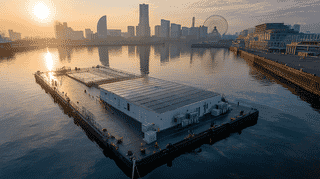
On March 25, 2026, five partners, NYK Line, NTT Facilities, Eurus Energy, MUFG Bank, and the City of Yokohama, launched a world-first floating data center powered entirely by solar panels and batteries at Yokohama Port. How does this off-grid demonstration differ from the MOL-Hitachi used-ship concept, and what does it say about Japan's answer to the AI power crisis?
Waymo and Toyota have agreed to explore bringing L4 robotaxi technology to personally owned vehicles. We unpack how Waymo's sensor-heavy approach differs from Tesla's camera-only FSD and China's Baidu Apollo, and what this means for Toyota's strategic direction.
Tokushima University researchers led by Prof. Tomohide Saio have unveiled OptoChaperone in JACS, a biohybrid tool that uses light to reversibly switch protein droplets on and off inside living cells. A look at how this Japanese breakthrough could accelerate ALS and Alzheimer's drug discovery, and how it compares with US and European condensate startups like Dewpoint Therapeutics and Nereid.
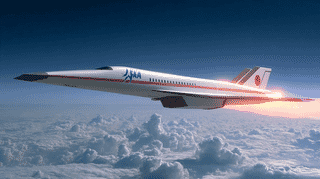
Waseda University, JAXA, the University of Tokyo, and Keio University have completed Japan's first Mach 5 combustion test using a hypersonic experimental aircraft. How does Japan's passenger-focused strategy compare with the US (Hermeus, Lockheed) and a militarily advanced China?
Panasonic has partnered with Kyoto University's iPS Cell Research Foundation to begin proof-of-concept trials for fully automating iPS cell establishment at Osaka's Nakanoshima Cross. The goal: slash per-patient costs from tens of millions of yen to around 1 million yen. How does Japan's approach compare with US rival Cellino's laser-driven biomanufacturing?
6G's high-frequency waves can't penetrate walls, so NTT invented a 3.5-micrometer liquid-crystal sheet you stick on windows that electrically bends radio waves to kill indoor dead zones. At one-tenth the thickness of conventional designs, it can be mass-produced on existing LCD factory lines. Japan just pulled ahead in the global RIS race where Nokia and Samsung are also sprinting.
How does Fujitsu's dual-band T2SL infrared sensor stack up against existing products? We break performance down into three axes, resolution, sensitivity, and wavelength, and go head-to-head with FLIR, Raytheon, L3Harris, Northrop Grumman, and Sweden's IRnova. Plus the commercial rollout roadmap from FY2026.