Tier IV, the company behind open-source self-driving stack Autoware, listed in Tokyo on July 22, 2026 and opened 7% below its offer price. How do you monetize software you give away?
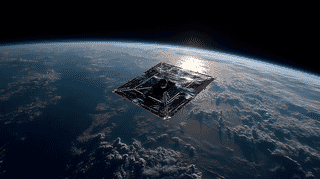
From mid-August 2026 SoftBank will fly a 65-metre helium airship from New Mexico across the Pacific and hold it about 20 km above Japan, testing voice, SMS and data from a flying base station that covers up to 200 km across. Commercial service is targeted from 2027. Here is how it differs from satellite direct-to-phone, why Loon died, and the business problem SoftBank has not solved.
LEAF, a deorbit device that drags dead small satellites out of orbit, was finished by space startup cosmobloom and Katsuragawa Seira, a Tokyo screw maker in business since 1938. How a town factory's eye ended up on a film thinner than kitchen wrap.
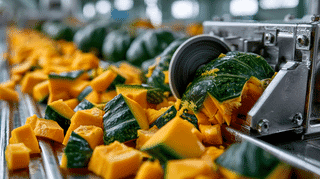
The only machine on Earth that cuts pumpkins into deliberately irregular 'rangiri' pieces. How Hokkaido's Synthemec cracked the paradox, then brought its parts in-house to win on precision and lead time, against an industry built for uniform cuts.
Japan's Patent Office has issued a final rejection of Nintendo and The Pokemon Company's application for a touchscreen creature-capture patent. The decisive prior art was a 2013 fan-made 3D Pokemon video, and the examiner dismissed Nintendo's argument that a copyright-infringing video cannot count. Here is what it means for the Palworld lawsuit, fact separated from speculation.
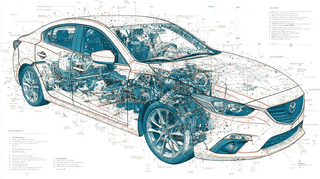
Kuroda Precision holds about 30% of the global market for EV drive motor-core dies. The 100-year-old firm now bets on amorphous alloy and cobalt-heavy permendur, and on a supply chain shaped by geopolitics.
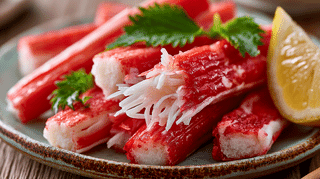
The crab stick in your salad or sushi roll traces back to a small town on Japan's Noto Peninsula, where it was invented as one of the country's great postwar food breakthroughs. The global surimi market is worth several billion dollars, roughly half of it crab sticks. Riding a wave of fish-eating and high-protein diets, kanikama is spreading fast, so why is Japan's surimi know-how so hard to imitate, and how is it sold abroad?
Seven & i, the owner of 7-Eleven, entered talks over a multi-billion-dollar stake in Żabka, Poland's largest convenience chain, then walked away on July 25. A look at why Europe is the gap in 7-Eleven's map, how the Polish upstart's autonomous stores and fintech already outpace many Japanese konbini, and how the deal contrasts with Seven & i's fuel-heavy US business.
Kyushu Electric has grown and cured Japan-made vanilla beans in a Fukuoka greenhouse, branding them Carol Vanilla. With a pollination gun and an automated curing machine, the utility is taking on the world's second most expensive spice, and Japan's 90%-plus import dependence.
On July 15, 2026, Nvidia's Jensen Huang stood in a Tokyo arcade and thanked Sega for the $5 million that saved his company in the 1990s. The story ran everywhere. What almost nobody mentioned: the executive being thanked had helped pick the technology that failed.
Nissin launched the first-ever cold-water-only Cup Noodle on July 20. Its patented Cold Rehydrate technology turns fridge-chilled water into chewy noodles in 5 minutes. Here's how Japan, birthplace of instant ramen, keeps reinventing it.