Pritzker laureate Riken Yamamoto calls Tokyo's Hills-style mega-developments, Azabudai Hills chief among them, a "colony for the rich." A look at the towers, the neighborhoods they replace, and how other cities have handled the same pressure.
For 6,000 years Japan has eaten fugu, a pufferfish carrying tetrodotoxin, a toxin Japanese authorities describe as 500 to 1,000 times more potent than cyanide, with no known antidote. From a warlord's ban to a prime minister's storm-night dinner, from a Living National Treasure's fatal last meal to a licensing exam half the candidates fail, this is how Japan turned the world's most dangerous fish into high art.
A 2026 survey reveals 70% of Japanese people feel giri-choco (obligation chocolate) culture is fading. While 85% of women don't want to participate in workplace chocolate-giving, over 40% now buy chocolate for themselves. Explore how rising cocoa prices and remote work are transforming Japan's unique Valentine's Day traditions.
As cocoa prices hit record highs, Japan embraces innovative alternatives — from sunflower seed "chocolate" to soy meat. Discover how rising food costs are reshaping Japanese food culture, driving innovation, and changing consumer habits just in time for Valentine's Day.
A new survey reveals 76.3% of unmarried Japanese adults have no romantic partner, up from 72% in 2023. Only 36.8% want to marry, women see no need for it, men worry about losing financial freedom. With Gen Z turning to AI for love advice and virtual relationships on the rise, Japan's demographic crisis deepens. How does your country compare?
Kyoto University professor Naoko Tosa showcased "disaster-prevention fashion" made from fire-resistant materials at Japan Society during New York Fashion Week. Her fusion of art, technology, and disaster preparedness is capturing global attention as a uniquely Japanese innovation.
Kyocera, Toyota, Denso and three other major Japanese firms have formed a consortium to promote the deployment of 760MHz ITS roadside communication units. By accelerating V2X technology — enabling vehicles and roads to "talk" to each other wirelessly — the initiative aims to support Japan's 2030 goals of reducing traffic fatalities and scaling Level 4 autonomous driving to 10,000 vehicles.
Japan's transport ministry has issued its first-ever guidelines requiring more women's toilet fixtures than men's in public facilities. From highway rest stops with reversible layouts to real-time occupancy displays, here's how Japan is finally addressing the gender gap in restrooms.
Japanese fashion brand MIYOKO unveils its latest collection in New York during Fashion Week 2026, transforming traditional kimono fabrics—including Yuki-tsumugi, Ojiya-tsumugi, Hon-Shiozawa, and Yuzen—into 14 contemporary garments. Backed by 50 years of craftsmanship, the brand showcases Japanese textile heritage on a global stage at Manhattan's historic St. Bartholomew's Church.
UNESCO and Relais & Châteaux have launched sustainable gastronomy pilot projects in 4 regions worldwide. Japan's three-Michelin-star L'Effervescence chef Shinobu Namae joins the initiative at Amami Oshima World Heritage Site, combining eco-friendly fishing with seaweed forest restoration. Discover how fine dining is becoming a force for biodiversity.
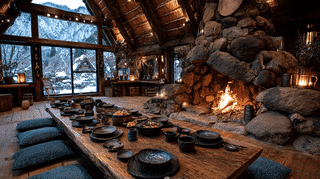
Wood-fire cooking is taking the global gastronomy world by storm, sparked by Spain's legendary Asador Etxebarri. Unlike charcoal, firewood imparts unique aromas and flavors from local trees, creating one-of-a-kind dishes. In Japan, rural restaurants in renovated farmhouses are embracing this ancient technique, attracting wealthy food lovers from around the world through "local gastronomy."