Calbee is switching 14 of its flagship snacks (including Potato Chips Lightly Salted, Consomme Punch, and Kappa Ebisen shrimp chips) to monochrome 'petroleum-saving packages' from May 25. The cause: ink shortages triggered by the Hormuz Strait crisis. A symbolic case of geopolitical risk reaching Japan's shelves, compared with parallel moves at Lindt, Lamb Weston and Smithfield Foods.
SEGA Sammy Holdings reported its FY2026 results: record revenue of 487.5 billion yen ($3.1B, +13.7% YoY) was wiped out by 58.8 billion yen in special losses tied to Rovio Entertainment (Angry Birds) and Stakelogic, producing the company's first net loss in 11 years. We unpack the impairment, the international community's skepticism about the 776 million-dollar Rovio acquisition, the deprioritization of F2P, the redeployment of 100+ developers onto full-game projects, and SEGA's bet on four new mainstay-IP titles ahead of Sonic's 35th anniversary.
Between March and May 2026, Japan launched a wave of perovskite solar cell demonstrations across the country—world efficiency records, rice paddies, mountain tea fields, skyscraper windows, highway parking areas, and Toyota's Woven City. We unpack for international readers why everything is happening at once.
Japanese crypto exchange Coincheck has partnered with telecom giant KDDI to launch au Coincheck Digital Assets, a joint venture offering a non-custodial wallet inside the au PAY mini-app to 39.7 million users. KDDI is investing roughly $65 million in Coincheck's parent company. How this differs from US (Coinbase, Robinhood) and Korean (SK Telecom T Wallet) models — and what it signals for the stablecoin era.
Japan's largest megabank MUFG partnered with Google on May 7, 2026, to build 'agentic banking' — AI agents that autonomously select products, choose the best payment method, and execute transactions. Unlike JPMorgan's employee-facing LLM Suite or BNP Paribas's sovereignty approach, MUFG is betting on consumer-facing autonomous finance.
Subaru cut its FY2026 operating profit forecast by 900 billion yen to just 40 billion yen, a 90% year-on-year plunge announced May 11. Beyond US tariffs, a North American cold wave, Middle East shipping disruptions, and EV asset impairment from Trump's environmental rollback all hit at once. Why does Subaru—with 80% North America sales reliance—suffer most among Japanese automakers?
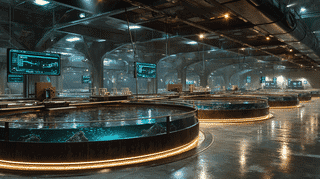
Japanese telecom giant NTT runs a land-based shrimp farm in Iwata, producing 180 tons/year and capturing the largest domestic share. A deep dive into the 10-year plan to free Japan from its 90% shrimp import dependence, plus how it stacks up against Norway and Singapore.
Honda's Zero EV brand launches its first model—the 0 Alpha compact SUV—in India by early 2027, exporting back to Japan. After cancelling three North American EVs and posting record losses, Japan's #2 automaker is betting on Rajasthan over Ohio. We unpack the gamble, the rivals waiting in India, and why this could rewrite Japanese EV strategy.
Koei Tecmo Holdings reports record-breaking FY2026 results with revenue of ¥88.3B and ordinary profit of ¥57.0B. Of that, roughly ¥16.4 billion ($105M) came from financial market operations—an investment income stream that rivals many companies' core business profits. Nioh 3 (now at 10M cumulative series sales), Pokémon's hidden hit Pokopia, and Hyrule Warriors: Age of Imprisonment drove the gaming side. Yet the company forecasts a 27.6% net income decline next year due to expanded human capital investment.
A 21-year-old shares yogurt ice cream with a 'mother' she just met. In Japan, you can rent almost anyone — a mum, a middle-aged uncle, a boyfriend, or even a guy who literally does nothing. Inside Japan's quietly booming and surprisingly tender human-rental economy, from a 400-person agency to the Brendan Fraser film inspired by it.
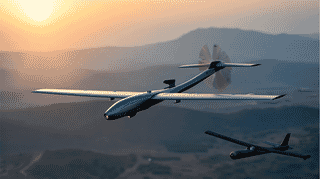
Terra Drone has unveiled flight footage of its fixed-wing interceptor drone Terra A2 — 75km range, 312km/h top speed, 40-minute endurance. CEO Toru Tokushige outlined the layered air defense vision in a United24 Media interview. Inside the modern methods of stopping Shahed-type kamikaze drones and the new air defense economics being shaped by a Japanese startup.