Nissan, in the midst of its Re:Nissan recovery plan, will cut about 900 European jobs (10% of the regional workforce) and consolidate two production lines into one at its UK Sunderland plant. With utilization at roughly 50%, China's Chery is in talks to take over the freed-up line. We unpack what this means alongside Volkswagen and Stellantis restructuring, against the backdrop of Chinese EV pressure squeezing Europe's auto industry.
Saab Technologies Japan has named Akira Ukaji as its first Japanese country manager and representative director. The Swedish defense giant is positioning its GlobalEye AEW&C aircraft as the successor to Japan's aging E-767 fleet, with industry sources targeting a 2035 replacement. After Japan's April 21 abolition of the 'Five Categories' export rule, can a non-US contender finally crack Japan's airborne early warning market?
Seventeen years after Starbucks rolled out matcha latte globally, Japanese tea prices have tripled in a year and China now produces 5,000 tons of matcha—matching Japan. Inside the supply structure that pushed 38 major Japanese tea firms to issue an emergency statement.
With matcha scarce and prices soaring, an unglamorous Japanese herb called yomogi (mugwort) is being talked up as the next matcha. One Osaka supplier shipped a record 754 tons in 2025 and expanded cultivation 1.5x, while mugwort-steam salons grew 1.8x in three years. A trading-company veteran turned mugwort farmer is now branding the weed.
Sanrio, the global owner of Hello Kitty and Kuromi, is investigating whether a managing director who also led its U.S. subsidiary received hundreds of millions of yen in undisclosed compensation over multiple years. A special probe has been launched and the full-year earnings announcement postponed. The case exposes a structural gap in Japan's corporate governance: the parent's compensation committee never had jurisdiction over subsidiary CEO pay.
On May 1, Japan's METI met infrastructure operators from the power and gas sectors, and Economy Minister Akazawa asked electricity companies to run emergency system inspections and report within a month. The order covers 24 critical-infrastructure operators in the power sector. The trigger was Anthropic's Claude Mythos Preview, announced April 7, which surfaced a 27-year-old bug chain in OpenBSD's TCP SACK code among others. The UK's AISI reached a more measured verdict. How Japan's penalty-free approach compares with CISA's OT principles and the EU's NIS2.
GPU-to-GPU optical interconnects were forecast to arrive around 2033. NVIDIA just pulled them in by five years, putting co-packaged optics into the NVLink switch of its 2028 Feynman generation, and locking in supply with $2 billion investments in each of Lumentum and Coherent. Furukawa Electric is spending 38 billion yen to more than quintuple DFB laser chip capacity; Sumitomo Electric supplies core components for NVIDIA's Quantum-X Photonics switches but was left out of the funding round. Where Japan's optical suppliers stand, and how NTT's IOWN runs on a different clock.
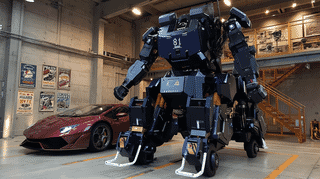
Tsubame Industries' Archax is a 4.5-meter, 3.5-ton piloted robot that transforms between robot and vehicle modes, priced at 400 million yen. What that buys, the CTO who engineered Yokohama's moving life-size Gundam, the Shoji Kawamori special edition, and how Unitree's $650,000 GD01 changed the competitive picture in May 2026.
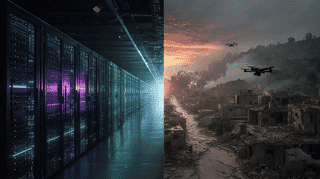
Chinese G.657.A2 optical fiber went from 32 yuan to 240 yuan per fiber-kilometer in a year, a 650% jump. The visible driver is AI data centers; the hidden one is disposable fiber-optic drones on the Ukraine front. China holds 60% of preform capacity, Japan leads on 13,824-core cables, and the US holds the hyperscaler demand.
JBIC and Japan's three megabanks signed $2.221 billion in loans for the first three projects of a $550 billion US investment ceiling, the price Tokyo paid to bring Trump's tariffs down to 15%. The deal, the dollar-funding crunch, and what changed when the Supreme Court ruled IEEPA tariffs unlawful in February 2026.
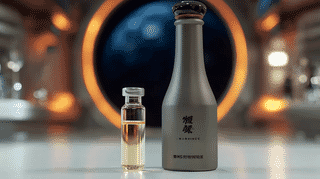
Yamaguchi's premium sake brand Dassai and Japanese engineering giant Mitsubishi Heavy Industries brewed sake in space for the first time in human history. The result was a single 100ml bottle, priced at about $700,000, and it sold. Inside the Dassai MOON Project, the long-term plan to build a brewery on the Moon, plus practical brewery-tour information for visitors to Iwakuni, Yamaguchi.